India’s construction sector is experiencing a significant evolution as developers, architects, and residents increasingly prioritize sustainable and environmentally sound building materials. A standout innovation in this shift is the WPC (Wood Plastic Composite) door frame—a smart, long-lasting, and eco-conscious alternative. Spearheading this change are dedicated WPC door frame manufacturers in India, with companies such as Jamex WPC establishing new standards for quality, environmental stewardship, and functional performance.
In an era of dwindling natural resources and growing climate awareness, WPC door frames are demonstrating their transformative potential. Here’s a look at their role in advancing sustainable building practices nationwide.
Conventional hardwood door frames depend on harvesting mature trees, accelerating deforestation. India’s substantial demand for wooden frames in residential and commercial construction has traditionally carried a heavy ecological price.
WPC door frame manufacturers in India are rewriting this story. These frames are produced from a specialized mixture of recycled wood fibers and high-grade plastics. This formulation significantly decreases the consumption of natural wood, aiding forest conservation and encouraging more responsible building methods.
Jamex WPC, for instance, employs sustainably sourced materials and sophisticated production processes to lower environmental impact while providing top-tier, durable products.
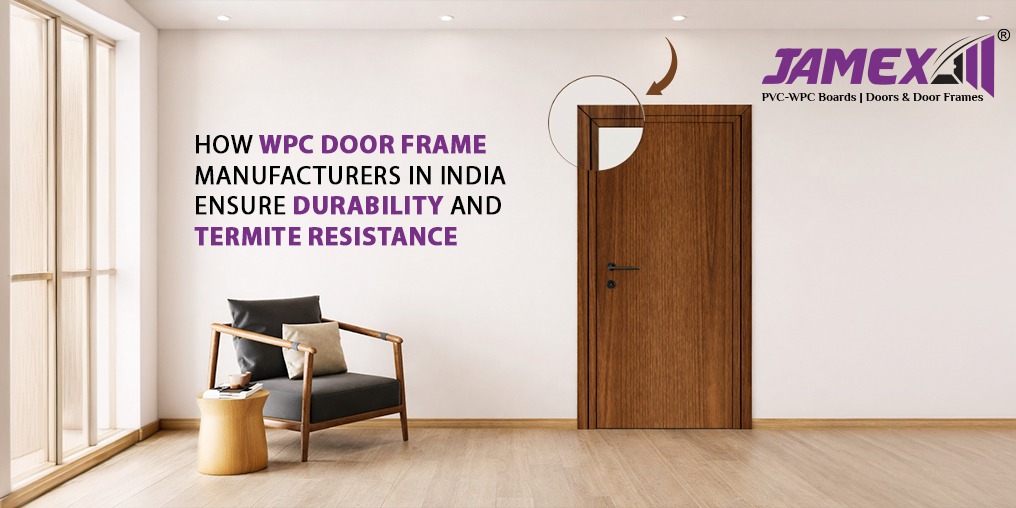
A key benefit of WPC frames is their resilience against severe weather, moisture, and pests—common weaknesses of traditional timber. In areas with high humidity, coastal climates, or termite activity, wooden frames degrade rapidly, needing frequent upkeep or replacement.
By contrast, WPC door frames are:
This results in exceptional service life with minimal maintenance expenses. Through refined engineering, brands like Jamex WPC provide frames that retain their form, strength, and appearance for decades—making them a sustainable option for both the planet and property owners’ budgets.
Building waste poses a major environmental challenge across India. Traditional wooden frames that become damaged, rotten, or broken are typically sent to landfills, adding to pollution and resource waste.
WPC frames offer remarkable stability and resistance to degradation. They can be fabricated to exact dimensions, which reduces off-cuts and installation waste. Furthermore, WPC is a recyclable material, supporting a circular economy model. Jamex WPC emphasizes manufacturing precision and efficient material use to further limit waste generation.
Modern construction calls for materials that are:
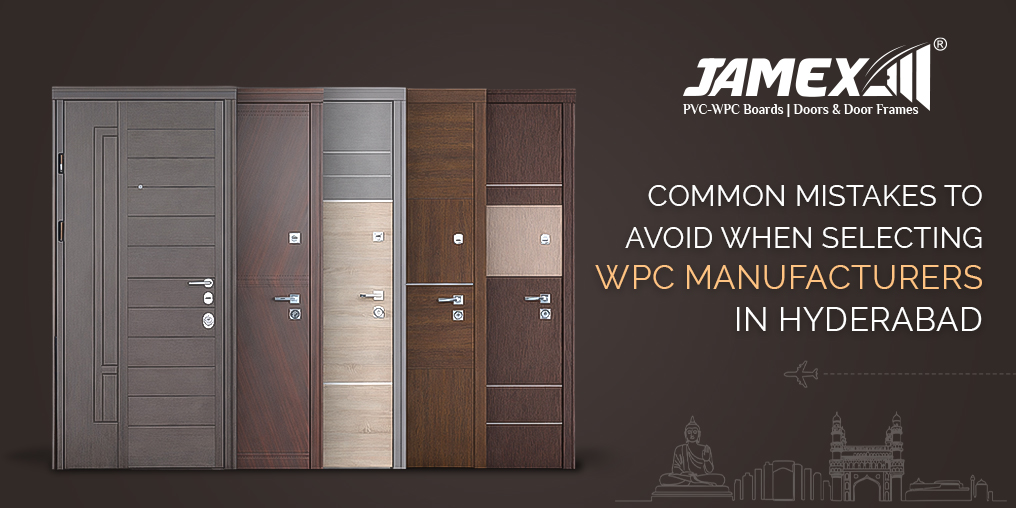
WPC door frame manufacturers in India are meeting these needs through improved engineering and design versatility. Jamex WPC supplies customizable frames in multiple dimensions, finishes, and profiles—appropriate for high-end residences, business environments, hospitality venues, offices, and contemporary apartments.
These frames provide structural integrity, are lightweight for easy handling, and work with various door types, including flush, laminated, PVC, and solid doors.
A fundamental reason for the sustainable revolution led by WPC producers is their dedication to responsible manufacturing. Prominent Indian firms are investing in:
Jamex WPC is a leader in implementing green manufacturing principles. The company ensures that every stage—from material procurement to packaging and distribution—conforms to international sustainability benchmarks.
With India’s growing adoption of green building standards such as IGBC and GRIHA, the need for eco-friendly materials is climbing steeply. WPC door frames are ideally suited for sustainable homes and certified commercial projects due to their:
Builders and developers using Jamex WPC products gain access to materials that positively influence these certifications—enhancing both project marketability and ecological accountability.
The move toward sustainability in India’s construction industry is more than a passing phase—it is an imperative. WPC door frame manufacturers in India are central to this transition, offering inventive, robust, and planet-friendly solutions. Combining excellent performance, low upkeep, and a markedly smaller ecological footprint, WPC frames have emerged as the material of choice for modern building.
Brands like Jamex WPC are consistently raising the bar for quality and sustainability, assisting India in creating smarter, greener, and more durable infrastructure. As the nation adopts eco-aware living, WPC door frames represent a decisive stride toward responsible construction.
Say something to start a live chat!